
Lilla Båtskär
The little island that can
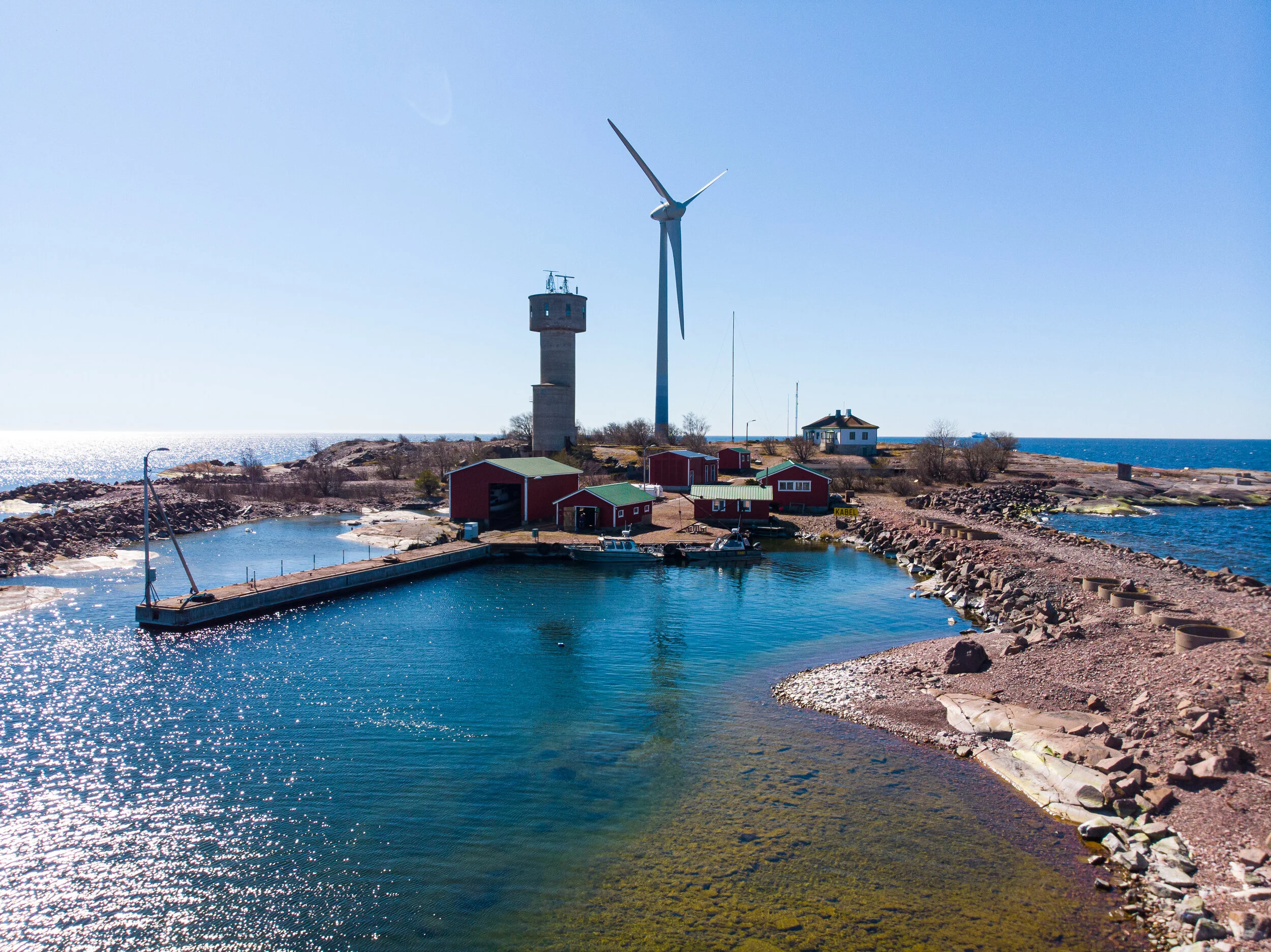
Lilla Båtskär is a small island with a remarkably long history of being put to use. Its location at the entrance to the Åland archipelago has made it important for navigation, pilotage, mining and, more recently, wind power. What comes next in Lilla Båtskär’s history, we don’t know. But judging by its past, it will probably be something interesting…
The History
For centuries, Lilla Båtskär was an important landmark for ships approaching the Åland archipelago from the open Åland Sea. Once the island came into sight, ships could find their way towards Rödhamn and into the sheltered waters of the archipelago, continuing east towards places such as Turku.
Because of its location, there were early attempts to make Lilla Båtskär easier to identify from the sea. A lighthouse was built on the island in 1751. The lighthouse no longer exists, but it was the beginning of a long history of using this small island to make navigation through these waters safer.
Pilotage also became part of the island’s history. Nyhamn pilot station was originally located north of Lilla and Stora Båtskär and was later moved to Stora Båtskär. In 1942, it was decided to move the station once again, this time to Lilla Båtskär, where the location offered better harbour conditions. The name Nyhamn pilot station followed with it. Pilots remained based on Lilla Båtskär until the station was closed in the 1990s.
The mining project
In the 1950s, Lilla Båtskär took on a very different role. Iron ore had been found beneath the seabed south of the island, and Oy Vuoksenniska Ab started an ambitious mining project.
A mining tower and the necessary infrastructure were built on the island. Inside the tower, a shaft descends almost 300 metres into the rock, with a tunnel extending roughly 1,300 metres south beneath the sea towards the iron ore deposit. The project was abandoned in 1959 as falling iron ore prices and high costs made further development uneconomical.
The iron ore had caused problems long before anyone tried to mine it. Magnetic disturbances around Nyhamn could affect ships’ compasses, making navigation difficult for vessels approaching from the open Åland Sea. In 1937, the radio beacon at nearby Rödhamn was established largely to help ships navigate safely through the area.
The mine closed, but the tower found a new purpose as a lighthouse. When the wind farm was built in the 2000s, the lighthouse lantern was removed, and today the wind turbines carry leading lights for vessels passing through the area. The waters around Lilla Båtskär are still marked as an area of magnetic disturbance on nautical charts.
Lilla Båtskär today
Today, Lilla Båtskär is still very much a working island. The wind farm is in operation, and the old pilot station, mining infrastructure and other traces of the island’s different roles remain part of the landscape.
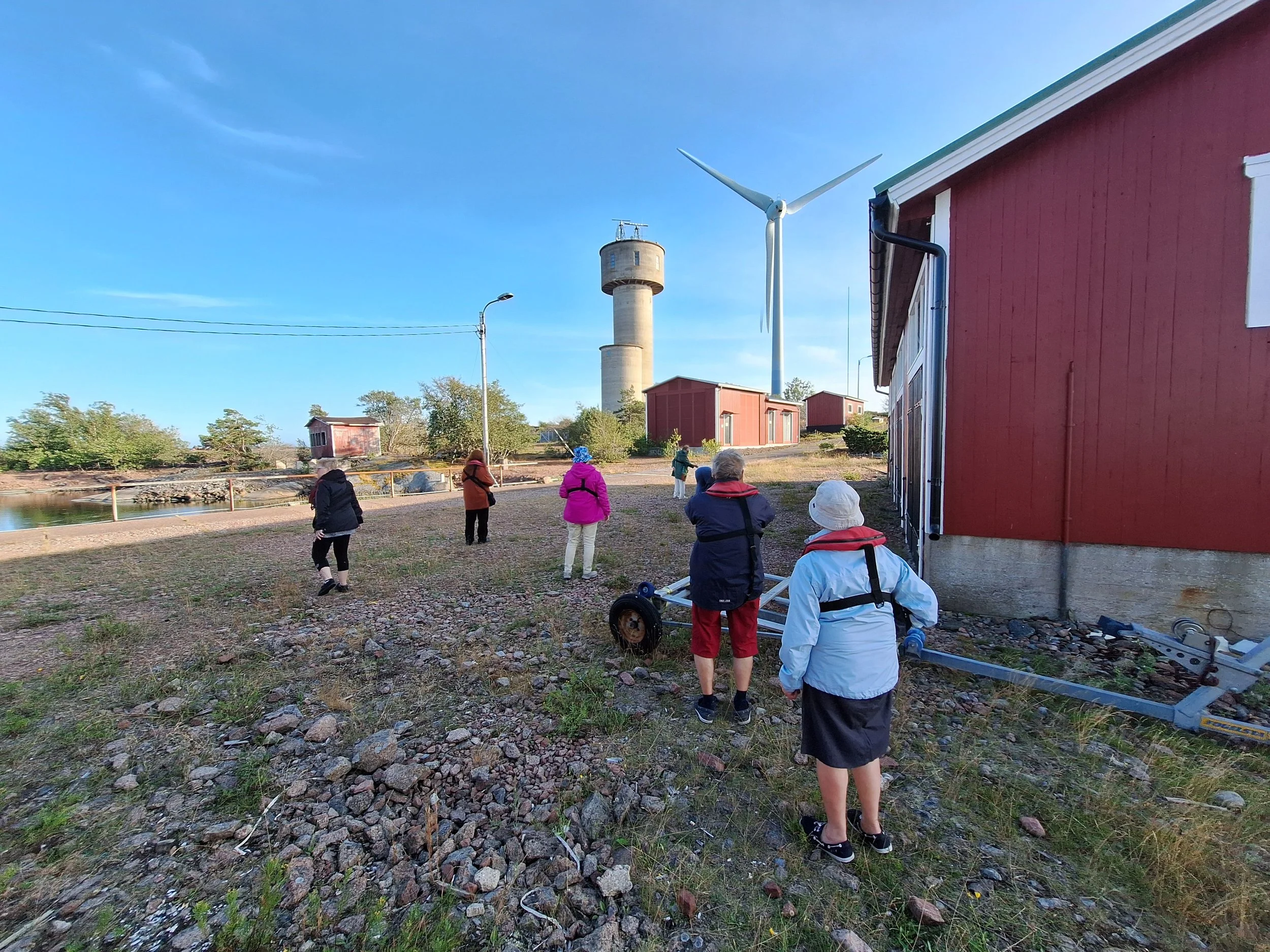
During the summer, Lilla Båtskär is also a popular destination for local day trips. Many Ålanders have a personal connection to the island through relatives who worked at the pilot station or during the mining project, and the stories of the people who lived and worked here are still very much alive.
Lilla Båtskär is not a place created for visitors. It is a working environment with layers of maritime and industrial history, surrounded by nature and rich birdlife. That combination makes it a very different place to visit – and a good example of how the Åland archipelago has been, and still is, put to use.
Visit Lilla Båtskär with Shipland
Lilla Båtskär is a good destination for visitors looking for something a little different. There are no attractions or facilities created for tourism – instead, the interest lies in exploring the island itself and understanding the different ways it has been used over the centuries.
When visiting with Shipland, we go ashore and explore the island while I tell the story behind the pilot station, the mining project, the wind farm and the other traces of working life that can still be seen today. I have my own key to the old pilot station, so the visit can also include a look inside the building. Its unusual history and compact size make Lilla Båtskär particularly suitable for groups and business events.
Lilla Båtskär can be included in a Private Tour and is also a destination I sometimes use for island hopping, depending on the route and conditions.